
What Is Vimto Made Of? The Ingredients Behind Britain’s Most Mysterious Drink
Vimto is one of those British drinks that almost everyone has an opinion on but very few people could actually describe. It is purple. It is sweet. It tastes vaguely of berries. Beyond that, most people draw a blank. Ask what is actually in it and you will usually get something like “fruit? Blackcurrant maybe?”
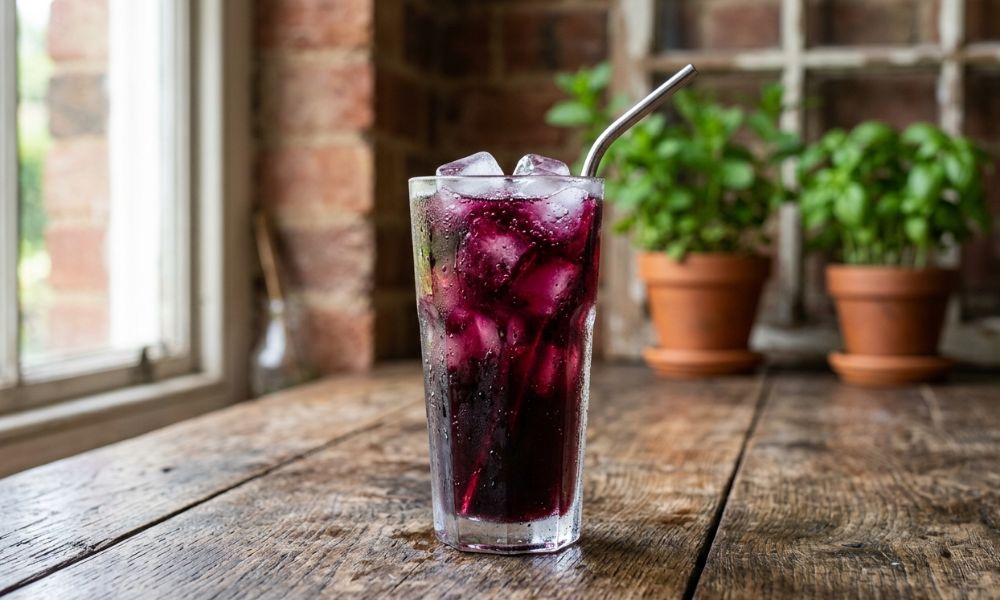
The answer is more interesting than that. Vimto has been made to a secret recipe since 1908, the full details of which are apparently known by only four people. That secrecy is part of the brand identity. But the ingredients list on the bottle tells you quite a lot, even if it does not tell you everything.
TL;DR
UK Vimto cordial is made from water, sugar, mixed fruit juices from concentrate (grape, blackcurrant, and raspberry at around 10%), citric acid, the proprietary Vimto flavouring which includes natural extracts of fruits, herbs, barley malt, and spices, natural colourings from carrot and hibiscus, preservatives, and added vitamins C and D. The exact quantities and the specific herbs and spices in that flavouring remain a trade secret. Standard Vimto contains no alcohol, no gluten, and no pork-derived ingredients.
The Fruit in Vimto
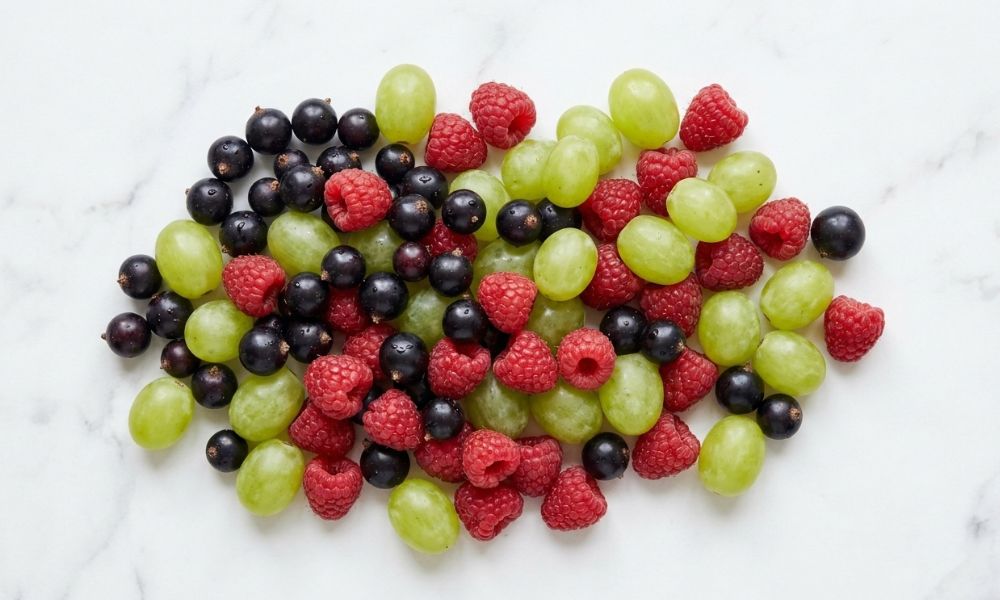
Three fruits make up the juice base: grape, blackcurrant, and raspberry. In the standard UK cordial, these come in at around 10% concentration from concentrate, which is fairly typical for a squash you dilute before drinking.
Blackcurrant is the most dominant flavour and the one most people identify when they try to describe what Vimto tastes like. Raspberry adds sharpness. Grape rounds it out and adds body. On their own, none of these three is particularly unusual. Together, in the specific ratios Nichols plc uses, they produce something that tastes distinctly like Vimto rather than like any of its component parts.
Some versions of the product, particularly those made under licence in the Middle East, include black carrot concentrate as a colouring rather than the carrot and hibiscus blend used in the UK formulation. Black carrot is a natural source of deep purple-red pigment and has been used in food colouring for decades. It is where a lot of the colour in Vimto comes from.
The Secret Part
The label says “Vimto Flavouring (including Natural Extracts of Fruits, Herbs, Barley Malt and Spices).” That is the ingredient doing most of the heavy lifting, and it is also the part nobody outside Nichols plc fully knows.
The inclusion of barley malt is genuinely interesting. Malt extract has a slightly roasted, almost caramel quality that adds depth to sweet drinks without you necessarily being able to identify it. It is the kind of ingredient that makes something taste more complex than the obvious fruit notes would suggest. You probably would not guess it was in there, but take it out and something would feel missing.
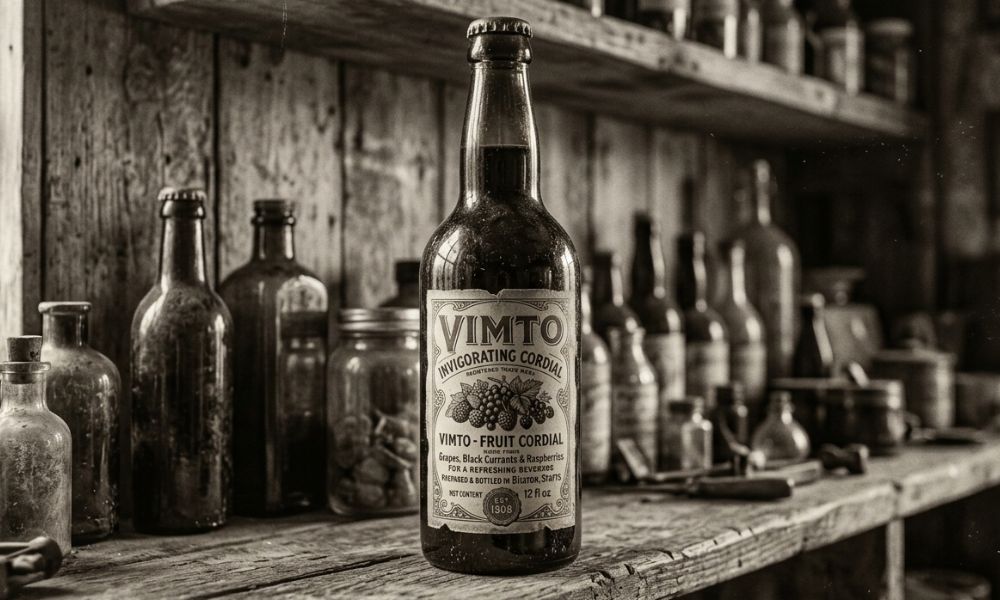
The herbs and spices are similarly unspecified. John Noel Nichols, who invented Vimto in 1908, started out as a wholesaler of herbs, spices, and medicines in Manchester. His background was in that trade, not in sweets or drinks, and the original formula reflected it. Early Vimto was marketed as a health tonic called Vim Tonic, sold on the premise that it gave the drinker energy and wellbeing. The name came from “vim,” meaning vigour. It was only gradually reframed as a soft drink rather than a medicine.
That history explains why Vimto tastes slightly different from other fruit cordials. Most squash is essentially sweetened fruit juice with some acid and preservatives. Vimto has that additional layer of something botanical, the herbal and spice element that Nichols brought from his original business.
The Preservatives and Additives
Two preservatives appear in the UK cordial: sodium benzoate (E211) and potassium sorbate (E202). Both are standard in soft drinks and squashes. Sodium benzoate in particular has been the subject of ongoing discussion in food science circles because of research suggesting it can interact with ascorbic acid (vitamin C) under certain conditions to form small amounts of benzene. Vimto contains both vitamin C and sodium benzoate. The levels involved are well within the limits set by UK food safety regulators, but it is worth knowing if you are paying attention to what is in your food.
Citric acid gives Vimto its tartness and helps preserve it. Sodium citrate is an acidity regulator that keeps the pH stable. Neither is unusual in this kind of product.
The vitamins added to the UK cordial, C and D, are a relatively recent addition. Vitamin D was added in April 2021, which had an unexpected consequence: it made Vimto no longer suitable for vegans in the UK, because the vitamin D used is derived from lanolin, which comes from sheep’s wool. Before 2021, UK Vimto cordial was vegan. It is not any more, at least in standard form. The no-added-sugar version uses sucralose and acesulfame K as sweeteners rather than sugar.
Is Vimto Halal?
Yes. Vimto contains no alcohol, no pork derivatives, and no gelatin. The brand has confirmed publicly that its products contain no animal products in the formulation itself, with the exception of the vitamin D added to the UK cordial (lanolin, from sheep’s wool, which is not considered haram). Vimto is widely drunk across the Muslim world and has been the dominant cordial drink during Ramadan in Saudi Arabia and the wider Gulf region for decades. Over 20 million bottles are sold in the GCC market during Ramadan alone each year. The drink’s deep association with iftar, the meal that breaks the fast at sunset, goes back to at least the 1920s when the Aujan family first introduced it to the Middle East.
That context is worth holding in mind when you look at the ingredients. Vimto was never designed specifically for the halal market, but the original formulation happened to contain nothing that created a problem. The combination of fruit, herbs, spices, and natural colourings aligned with what was acceptable, and the brand’s reputation in Muslim-majority countries grew from there.
The Sugar Content
Standard Vimto cordial is sweet. A diluted serving made to the recommended ratio contains around 4.7g of sugar per 100ml, which is moderate for a ready-to-drink fruit cordial. That figure goes to essentially zero in the no-added-sugar version, which uses artificial sweeteners instead.
The sugar in standard Vimto is sucrose, the same as table sugar. No high-fructose corn syrup, no unusual sweetener combinations in the full-sugar version. Fairly straightforward.
How the UK and Middle East Versions Differ
The formulation sold in the UK and the version made under licence in the Middle East by Aujan are not identical. The concentration differs, which is why the Middle Eastern version tastes noticeably stronger and sweeter to people used to UK Vimto. The colouring differs too, with the Middle Eastern version historically using black carrot and caramel rather than the carrot and hibiscus blend in the UK product.
Both are made to the same core Vimto flavour profile, but the experience of drinking them is different enough that people who grew up with one version often find the other slightly off. It is a small but genuine difference, the kind that happens when a recipe is adapted for a different market over many decades.
What fruit is in Vimto?
UK Vimto cordial contains grape, blackcurrant, and raspberry juice, all from concentrate, at around 10% of the total product. Blackcurrant is the most dominant of the three and the flavour most people identify when trying to describe what Vimto tastes like. Some Middle Eastern versions of the product also include pear juice concentrate and use black carrot for colouring.
Does Vimto contain alcohol?
No. Vimto contains no alcohol. The brand has confirmed this publicly and it is reflected in the ingredients list. It is one of the reasons Vimto became so popular in the Middle East, where it has been a staple Ramadan drink for nearly a century. The “Cheeky Vimto” cocktail you might have heard of does not actually contain Vimto at all, just port and blue WKD mixed together.
Is Vimto vegan?
UK Vimto cordial is no longer vegan. Vitamin D was added to the UK formulation in April 2021, and the vitamin D used is derived from lanolin, which comes from sheep’s wool. Before that change, the standard cordial was considered vegan. The no-added-sugar version of the UK cordial also contains this vitamin D, so the same applies.
What gives Vimto its purple colour?
The colour in UK Vimto comes from natural food colourings, specifically concentrates of carrot and hibiscus. Hibiscus produces a deep red-purple pigment naturally, which combined with the dark berry juices gives Vimto its distinctive colour. Some versions of the product made for the Middle Eastern market use black carrot concentrate instead, which produces a similar deep purple tone.
What are the herbs and spices in Vimto?
Nichols plc has never disclosed the specific herbs and spices used in the Vimto flavouring. The recipe has been a closely guarded trade secret since 1908, reportedly known in full by only four people. The label confirms the flavouring includes natural extracts of fruits, herbs, barley malt, and spices, but the exact composition is not public. Barley malt is the one ingredient that is specifically named, and it contributes a subtle depth to the flavour that sets Vimto apart from standard fruit cordials.